

If you're asking how should a knit vest fit, the short answer is: shoulders sit on the shoulder bone, armholes hold close without digging, the placket lies flat at the fullest part of the chest with no gaps between buttons, and the hem ends at the hip bone — the vest skims you, never clings and never swims. A vest is also the least forgiving knit you own. With no sleeves to absorb a sizing error, the button placket reports every wrong decision first. This guide walks the four check zones — shoulder, armhole, placket, hem — then adds a 60-second self-check, height-based hem placement, layering room for air-conditioned offices, and the size-chart routine to run before you order online.
Key Takeaways
- A knit vest should skim, not cling: placket flat, armholes closed, hem level.
- Shoulder seams end at the point of the shoulder bone; armholes hug the body without digging into the underarm.
- Hem placement is a height question: the hip bone is the default reference, and the size chart's flat length settles the rest.
- Buttons are the alarm system: X-wrinkles between buttonholes mean too small, a front that swings away means too big.
What does "a good fit" mean for a knit vest?
A good fit comes down to one idea: skim, not cling. The vest should follow your outline closely enough to read tailored, but with enough ease that the fabric never pulls, shines, or cups around the body. Two things set the tolerance. Knit elasticity lets pullover styles forgive a close cut, which is why a relaxed sweater vest fit can sit loosely and still look intentional. A tailored vest fit — the button-front kind with welt pockets and a collar stand — has far less give, because the placket is a fixed measurement: the chest either closes over it flat or it does not.
In one sentence: shoulders on the shoulder bone, armholes close but not digging, placket flat with no X-wrinkles or gap at the fullest part of the bust, hem at the hip bone — skim, not cling. Every section below turns one clause of that sentence into a check you can run in a mirror.
Where should the shoulder seams and armholes sit?
On a sleeveless garment the shoulder seam does the work a sleeve cap would normally share, so sweater vest armhole fit is the fastest way to judge a size. Start at the top: the seam should end right at the point of your shoulder bone. Inside the bone means the back is pulling; past the bone onto the arm means the vest will sag all day.
Then the armholes — the most common failure point on knit vests. They should cut close to the body, high enough that the fabric does not gape open at the side when you move, open enough that lifting your arm does not drag the whole vest with it. Try the hug test: fold your arms in front of you. A fitted vest holds its line; a too-small one digs into the underarm. The three states, for quick reference:
| Zone | Too small | Just right | Too big |
|---|---|---|---|
| Shoulder seams | Seam sits inside the shoulder bone; fabric pulls across the upper back | Seam ends right at the point of the shoulder bone | Seam drops past the shoulder onto the arm |
| Armholes | Edges dig into the underarm when you lift your arms | Close to the body, smooth when you hug yourself | Gape away from the body; the side shows through |
How should the chest and button placket lie?
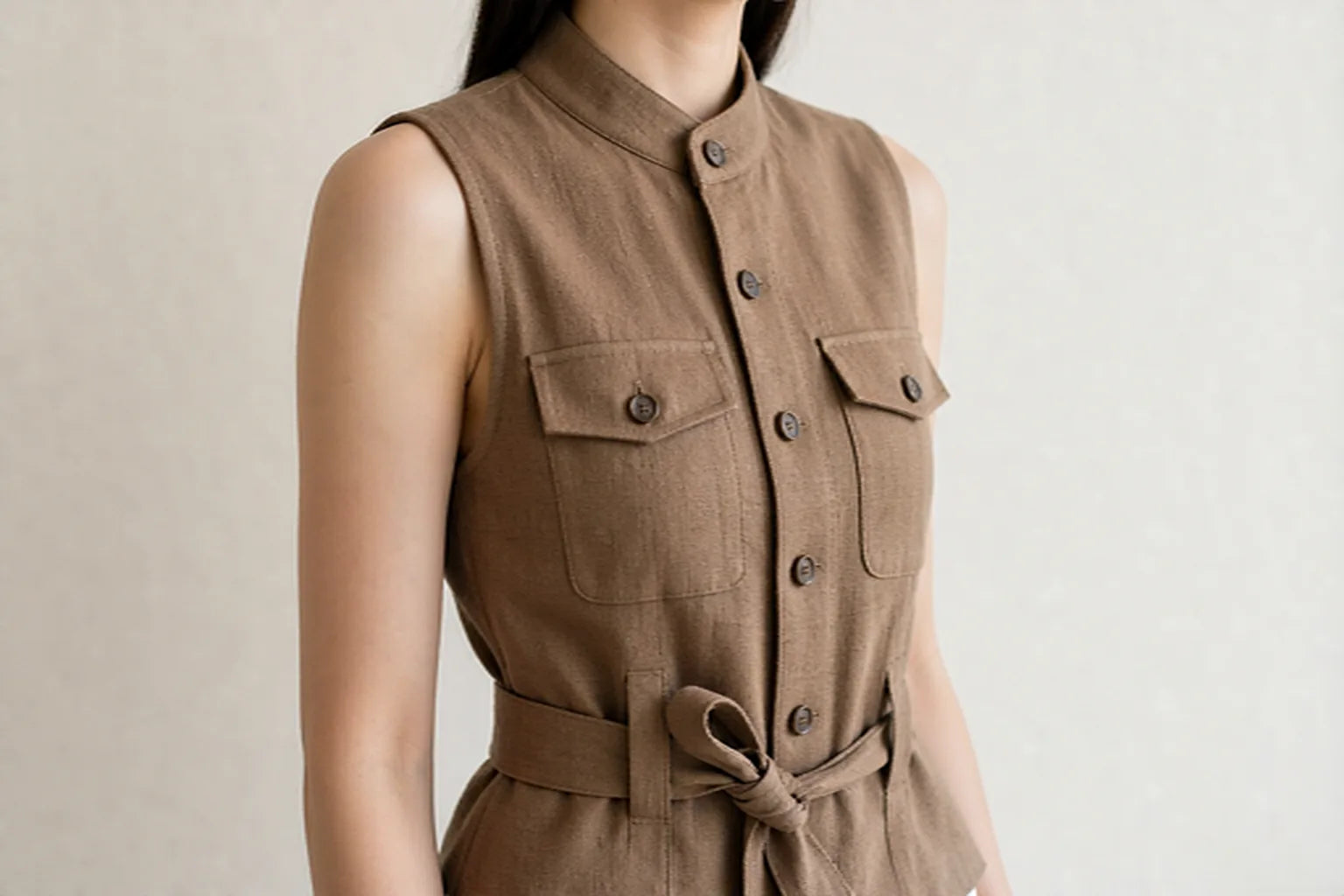
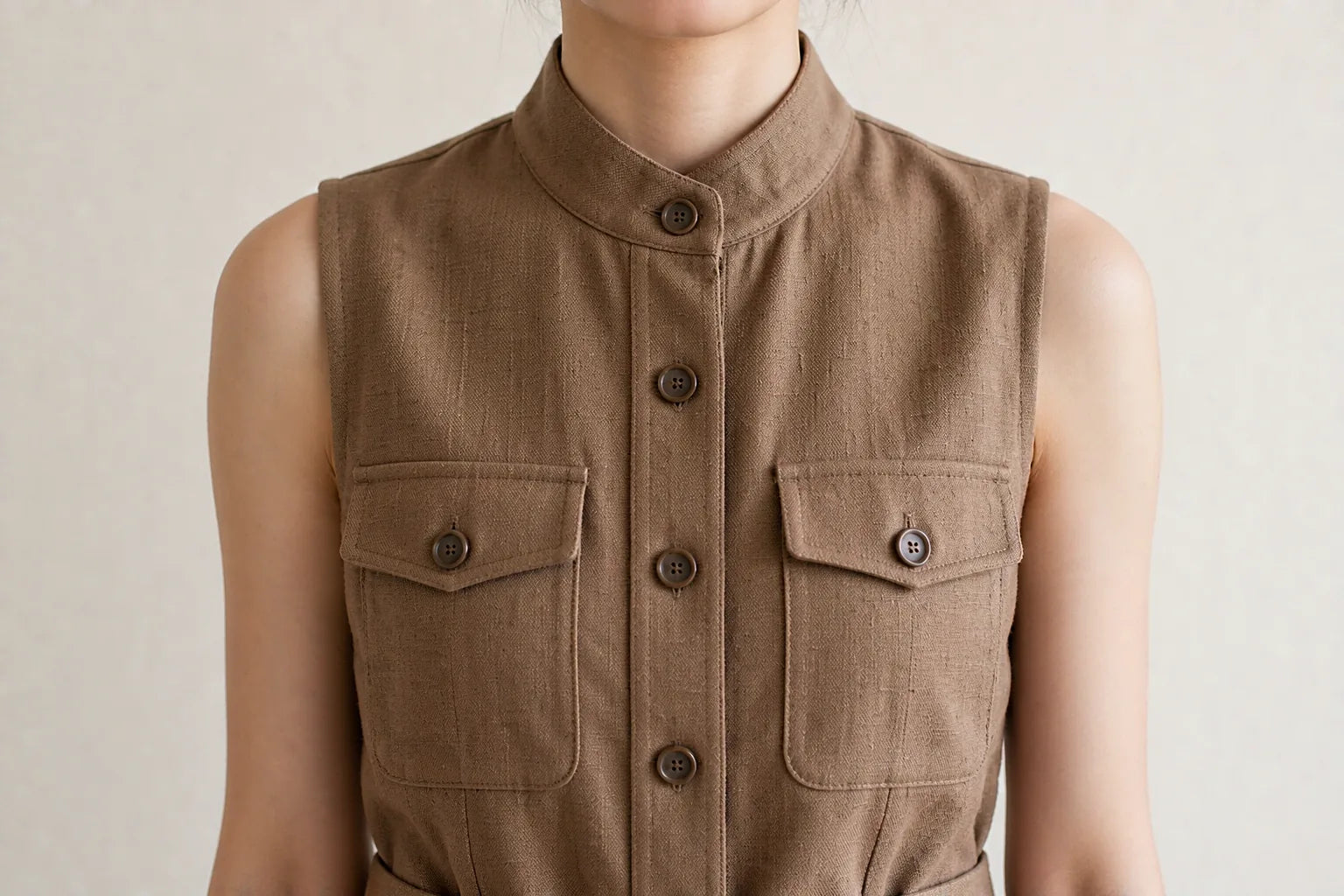
The placket is where button-front vests succeed or fail. Done up, the front should lie flat and smooth across the fullest part of your chest — usually a hand's width below the armpits, not necessarily at bust level. Two warning signs live here. X-wrinkles: two short diagonal creases meeting at a buttonhole mean the fabric is stretched past its comfort and the vest is too small across the bust. Gap: daylight visible between button edges means the closure is under strain — vest buttons gape because the placket cannot hold the tension, and no amount of neatening fixes it.
Check the welt pockets too: on a well-fitted vest they sit flat and never flare open. The same button-front logic applies to sleeveless cardigans, though sleeves change the shoulder and armhole rules entirely — how a cardigan should fit covers the sleeved version of this test.
Should a knit vest be tight or loose?
A knit vest should be fitted, not tight — it skims the chest and waist with the placket lying flat, closes without pulling between buttons, and leaves room for one thin layer underneath. Loose is equally wrong: extra width at the armholes and hem reads sloppy within an hour.
The practical method is to judge the vest over the layer you actually plan to wear it with. Knits relax slightly through the day; a vest that clings when you dress will cling harder by afternoon. If you sit between the two answers, remember that a tailored button-front vest can be belted closer but cannot be let out — err toward the size that closes flat.
Where should a knit vest hem end — and does height change it?
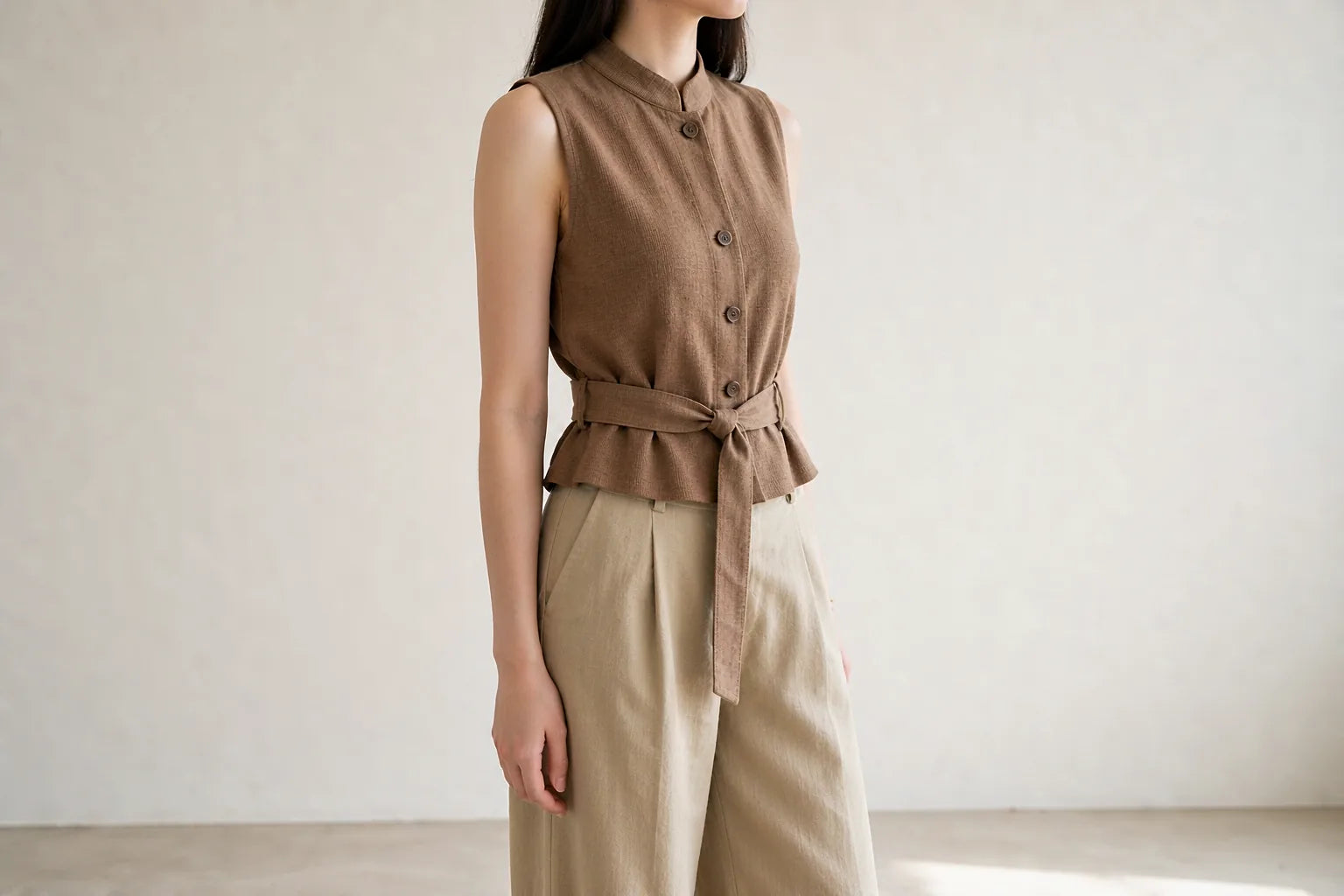
Where should a vest end? The honest answer starts with three landmarks on your own body rather than a number on a tag: the natural waist (the narrowest point of your torso), the hip bone (the ledge you can feel on either side, roughly a hand's width below the waist) and the widest point of the hip. A hem at the natural waist reads cropped; at the hip bone it is the reliable default for a tailored vest; stopping exactly at the widest point of the hip is the one placement to avoid, because it widens the silhouette rather than lengthening it.
Does height change it? Yes — knit vest length by height matters because a hem sits relative to your torso, not to the garment. The table uses universal body references only; to translate them into a specific garment, run the flat-length method in the size-chart section below. Worn over high-waist fluid-drape wide-leg pants, a hip-bone hem meets the waistband cleanly instead of disappearing into it.
| Height | Where the hem tends to sit | What to check before ordering |
|---|---|---|
| Under 160 cm | Vests cut for regular proportions can read long; a hem near the natural waist or hip bone keeps the leg line | Compare the size chart's flat length with your own shoulder-to-hip measurement; expect tailoring on longer cuts |
| 160–168 cm | The hip-bone hem is the default reference — it covers the waistband without shortening the leg line | Check the hem stays level all the way round when you sit |
| 168 cm and up | Hip bone to just below the hip works; longline cuts become viable | Avoid hems stopping at the widest point of the hip; verify flat length instead of assuming |
How can you check the fit in 60 seconds?
Five steps, one mirror, no measuring tape:
- Button up fully, starting at the collar stand.
- Face the mirror: the placket should lie flat at the fullest part of the chest — no X-wrinkles, no gaps.
- Turn sideways: the hem should sit level, parallel to the floor, all the way round.
- Hug yourself: the armholes should hold close without digging into the underarm.
- Sit down: the hem should stay put instead of climbing at the back.
Four passes and one sit-down later, you have a verdict that used to take a fitting room.
How should a knit vest fit over layers for air-conditioned offices?
What to wear under a knit vest in a country where every office runs cold: the thinnest layer that does the job, bought into the fit. Three rules hold. First, buy over the base layer — judge the vest with a fine cotton tee underneath, not bare skin. Second, respect the armhole budget: a vest armhole already sits close, so bulky sleeve volume bunches at the underarm; a thin, close-cut sleeve works where a thick one fails. Third, a linen-lyocell outer knit is a steady layer but is not designed to stretch over a heavy interior — the stand-collar knit top is the kind of thin inner layer that keeps the placket flat.
For the wider context of surviving over-chilled buildings, see our guide to dressing for air-conditioned offices in the tropics. The outfit pairings themselves are a separate craft and stay out of this guide.
Knit vest too big or too small — which signs do you trust?
Signals travel in pairs, and trusting the right pair matters more than any single one. Too-big signs move together: the shoulder seam slides past the shoulder bone, the armholes bag open at the side, the hem climbs at the back and the front swings away from the body when you walk. Too-small signs are equally coordinated: X-wrinkles at the buttonholes, a gap at the fullest bust, armholes that dig the moment you reach forward, and a hem that will not sit level at the front.
| Check | Too-big signals | Too-small signals |
|---|---|---|
| Shoulder seams | Slide past the shoulder bone onto the arm | Sit inside the bone, pulling across the back |
| Armholes | Bag or gape open at the side | Dig into the underarm when you reach forward |
| Button placket | Lies flat, but the whole front swings away from the body | X-wrinkles between buttons, gap at the fullest bust |
| Hem | Rides up at the back; swings when you walk | Lifts at the front and will not sit level |
So: knit vest size up or down? A knit with real stretch can sometimes forgive sizing down; a tailored button-front vest with a fixed placket cannot, so size up rather than hope. If you are between sizes, the decision framework in between sizes: size up or down settles it.
What should you check on the size chart before ordering online?
Ordering without a fitting room is a measurement exercise, and it takes ten minutes. First, the honest sizing reality: RQFashion, a curated multi-brand boutique, works in regular S/M/L sizing with no petite-specific cuts and no vest-specific chart — the vest's own page simply says regular, true to size. Second, run the flat-lay length method. Open the size chart on the product page and note the garment's flat length, then measure a vest you already own the same way: laid flat, from the top of the shoulder seam straight down to the hem. Compare the two numbers against where you want your own hem to land — that is knit vest length by height translated into data you can trust. Third, measure yourself at home once, properly: fullest bust, and shoulder to hip bone down the front.
The height note, in full: our knits are cut for regular proportions — knits sit closer than trousers, so we recommend 160 cm and up; under that, expect to tailor, or check the vest's flat length against your torso before ordering. The Tailored Button-Front Vest with Welt Pockets (S$62.99) lists its full size chart on the page. Returns run on a 30-day window, and standard shipping to Singapore and Malaysia is a flat S$6 — free over S$80 — so a size that misses can go back instead of living unworn in the wardrobe.
Frequently Asked Questions
Should a knit vest be tight or loose?
A: Fitted, not tight. The vest skims the chest and waist, the placket lies flat with no X-wrinkles or gaps, and one thin layer fits underneath without straining the buttons. Loose enough to move and raise your arms; close enough that the tailored shape survives. Cling is a too-small signal; a front that swings away is a too-big one.
Where should a knit vest hem fall if you're shorter?
A: Hems sit relative to your torso, so height changes the landing. For vests cut to regular proportions, a hem near the hip bone keeps the leg line; longer cuts can be checked with the flat-lay method — compare the size chart's flat length to your own shoulder-to-hip measurement. We recommend 160 cm and up; below that, compare flat length first and expect possible tailoring.
How do I know if my knit vest is too big?
A: Three signals confirm it: the shoulder seam has slid past the point of the shoulder bone, the armholes bag or gape open at the sides, and the hem rides up at the back while the front swings away when you walk. One loose day alone is not proof, but two or more together mean the next size down.
Why do the buttons on my vest gape?
A: A gape means the placket is under tension at the fullest part of the chest — the distance between button and buttonhole has run out. It is a size or cut issue, not a quality fault, and X-wrinkles around the buttonholes point the same direction. A sleeved cardigan redistributes this strain differently, which is why the two fit tests are not interchangeable.
Can you wear a knit vest in hot, humid weather?
A: Indoors, yes — and in Singapore and Malaysia that is most of the story, since offices, malls and trains run cold. A thin linen-lyocell knit over a light base layer works for commutes and air-conditioned days. For midday outdoors in full sun, a knit layer is the wrong tool; keep it for the chilled interiors it was meant for.
Fitted first — then styled
So, how should a knit vest fit? Shoulders on the bone, armholes close but free, placket flat at the fullest bust, hem at the hip bone, and a layer of room reserved for the office chill. Run the 60-second check on the vest in your wardrobe tonight — the buttons will tell you the truth in seconds. If the verdict is a replacement, start with the Tailored Button-Front Vest with Welt Pockets, made by RUIJIN, the founding brand in residence, or browse the workwear edit and the essentials collection. Once the fit is settled, how to style a knit vest takes over — and if your rotation is pullover knits, how a knit top should fit is the companion guide.
0 comments