

The daily temperature swing in Singapore and Kuala Lumpur is not three degrees or five — it regularly hits ten to twelve, and it happens in under ninety seconds. One moment you are walking through 33°C afternoon heat toward Raffles Place MRT; the next, the lift opens onto air-con holding at 21°C. If you have ever sat through a 2pm meeting with goosebumps on your forearms, you already know that air conditioned office outfits require a strategy. The best approach is a three-layer system: fine-gauge knit bases that breathe on the street, desk-stored cardigans that insulate indoors, and structured blazers for the rooms that run coldest. Below I walk through the framework, five outfit formulas, a fabric comparison, and the mistakes to avoid — most of which I've made on your behalf.
Key Takeaways
- - A 3-layer system (breathable knit base, desk-stored cardigan, optional scarf or blazer) handles the 10–12°C gap between tropical streets and overcooled offices.
- - Cotton-modal and lyocell knits outperform woven shirts as base layers: they breathe outdoors, insulate indoors, and uncrease after a day folded in a tote.
- - Keep one neutral cardigan and one structured blazer permanently at the office — never commute in your warming layer.
- - Five mix-and-match formulas cover client visits, desk days, and kopitiam lunches around RUIJIN's fine-knit pieces.
- - Singapore's SGBC found overcooling wastes up to 50% of cooling energy — your layering system, not the thermostat, is the variable you control.
Why Do Air-Conditioned Offices in the Tropics Feel So Cold?
Because they are measurably colder than they need to be. A 2025 survey of 5,000 workers by the Singapore Green Building Council found that more than half preferred indoor temperatures at 24°C or warmer — yet many commercial buildings still cool to between 21°C and 22°C. That overshoot persists eight hours a day, five days a week, and the Singapore Green Building Council noted that overcooling accounts for as much as 50% of total cooling energy in these buildings.
The gap feels worse than numbers suggest. Walking from 33°C pavement at 80% humidity into a 21°C interior, your damp skin loses warmth rapidly through evaporation — the same moisture that felt oppressive outside becomes a chilling agent inside. You shiver before your tea cools. Then sitting still compounds it: a ten-minute walk generates metabolic heat; six hours at a desk produce nothing. The towers around KL Sentral and Marina Bay were never tuned for the person under the vent — chillers get sized for peak loads and server rooms, then left alone for years. Your 2pm shiver isn't a malfunction; it's a design assumption.

What Is the Best Layering Strategy for Hot Commutes and Cold Offices?
The system I have tested through eight monsoon seasons commuting between KL and Singapore is a three-layer approach built on one principle: dress for the heat, carry for the cold. Three rules hold it together.
Rule 1: Dress for the heat, carry for the cold. Whatever you wear during the commute should work at 33°C. The noon bus-stop test decides what commutes; everything else rides in the bag.
Rule 2: The desk layer never leaves the office. One cardigan, one scarf — these live in your drawer permanently. They handle the drop between the door and your seat, and most people fail this rule by carrying warmth home every night and forgetting it the next morning.
Rule 3: The base must look complete on its own. For most of the day, it is the outfit. Your commute top must look finished — not an underlayer waiting for something.
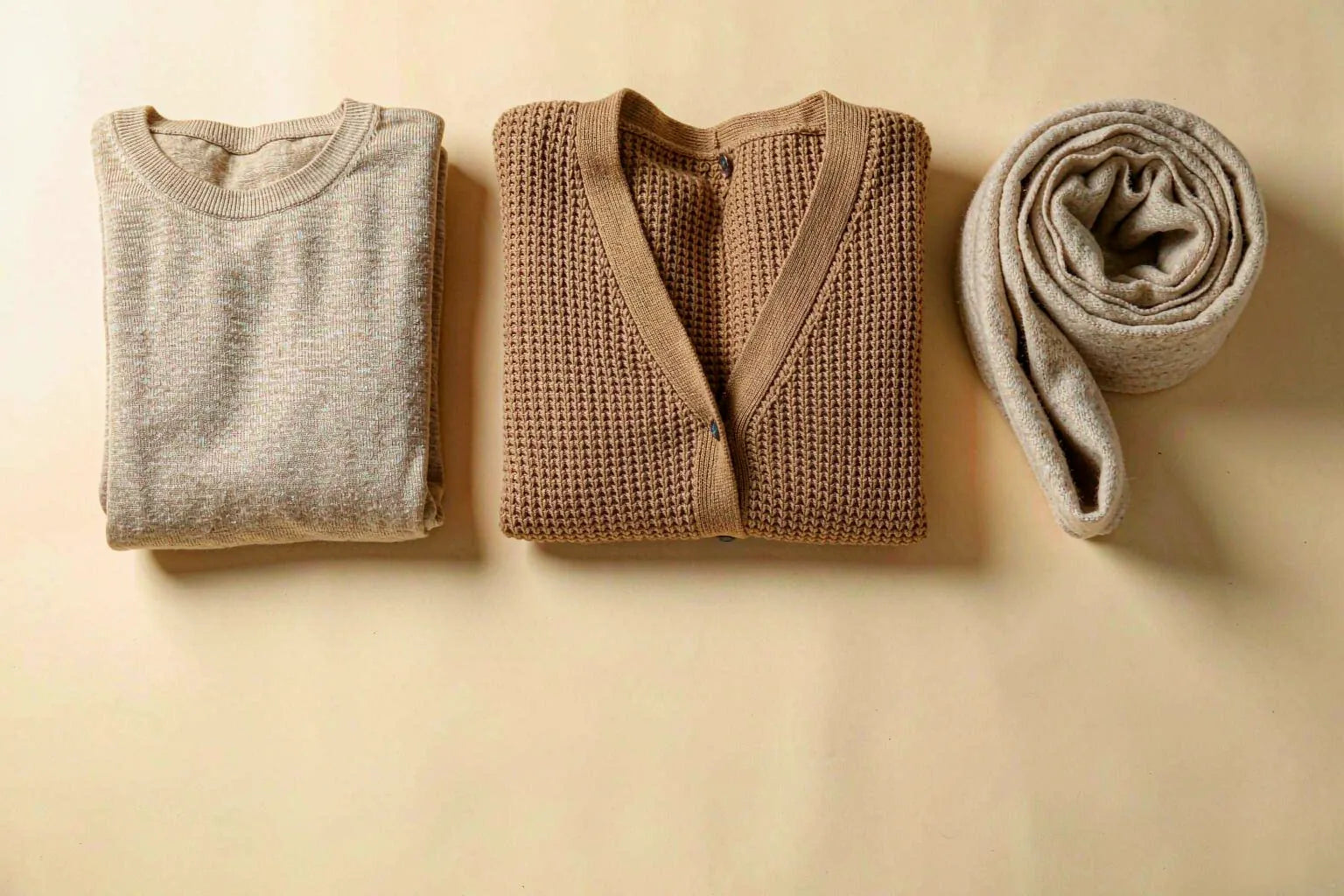
The three layers are: a breathable base — a fine-gauge knit top in cotton-modal or lyocell that handles sweat and dries fast; a desk layer — a lightweight open-knit cardigan in a neutral tone, kept at the office; and an optional extra — a structured blazer or scarf reserved for client meetings and the coldest rooms. My colleague Priya, an account manager in Petaling Jaya, used to treat presentation days like stakeouts — blazer on from the front door to the boardroom, damp by the lift. Since she started keeping two cardigans folded in her filing cabinet, the blazer stays home and the goosebumps never arrive mid-deck. To see the knit pieces that anchor each layer, you can browse all RUIJIN pieces.
Which Fabrics Work Best for Tropical Office Layering?
Fabric is where tropical layering is won or lost. The wrong fibre traps sweat outdoors and holds chill indoors; the right one does both jobs without creasing. Here is how the main contenders compare:
| Fabric | Breathability | Wrinkle Resistance | Warmth When Layered | Best Role in Layering |
|---|---|---|---|---|
| Cotton (fine-gauge knit) | High | Good | Light | Base layer — wicks sweat, looks polished alone |
| Linen | Very High | Poor (creases easily) | Minimal | Outdoor pieces only — not a desk layer |
| Lyocell / Tencel | High | Excellent | Light–Medium | Base or mid layer — drapes, dries fast |
| Merino wool (fine) | Medium | Good | Medium–High | Desk cardigan — insulates without bulk |
| Bamboo viscose | High | Good | Light | Base layer — soft, quick-drying |
| Cotton-modal knit | High | Very Good | Light–Medium | The all-rounder — base or mid layer |
| Polyester blends | Low–Medium | Excellent | Medium | Avoid as base — traps heat and odour |
Knit tops outperform woven shirts as base layers because knits stretch and recover. They move during the commute and spring back at the desk. Wovens crease at every fold point and those creases set for the day. On GSM: aim for 120–160 GSM for summer tops — light enough to breathe, opaque enough for the office. Desk cardigans sit at 150–200 GSM; structured blazers at 180–230. Below 100 GSM reads sheer; above 250 belongs in a climate this region does not have. For a full breakdown, our guide to the best fabrics for hot, humid weather covers fibre science in detail.
For a base that hits the sweet spot, the slim V-neck base layer top and the matte-texture short-sleeve knit top are both cut in the lightweight cotton-modal we look for at 120–160 GSM — fine enough to wick, dense enough to look intentional.
How Do You Build a 5-Piece Desk-Layer Capsule Wardrobe?
Five pieces, stored permanently at the office, handle every temperature swing:
- Two knit tops — one short-sleeve, one long-sleeve, both neutral. Rotate as bases; bring home Friday for laundry. A soft crew-neck knit top covers the short-sleeve slot cleanly.
- One featherweight cardigan — open-knit in ecru or oat. The daily workhorse. The V-neck knit cardigan with ribbed trim folds into a drawer and still looks put-together in a meeting.
- One structured blazer — unlined, for the coldest rooms. The minimal lapel jacket with clean lines stays sharp on a hanger.
- One packable scarf — takes the edge off in conference rooms below 20°C, compresses to fist size.
Colour strategy: keep everything within two tones — oat, camel, charcoal. The quiet luxury palette makes mismatch impossible. Storage is simple: a desk drawer for knits (folded flat, never hung), a felt hanger for the blazer. These pieces do not commute. For the commute half of the problem, our work outfits for hot humid weather guide covers the street-side of the day.
What Air-Conditioned Office Outfits Work Best on Hot-and-Cold Days?
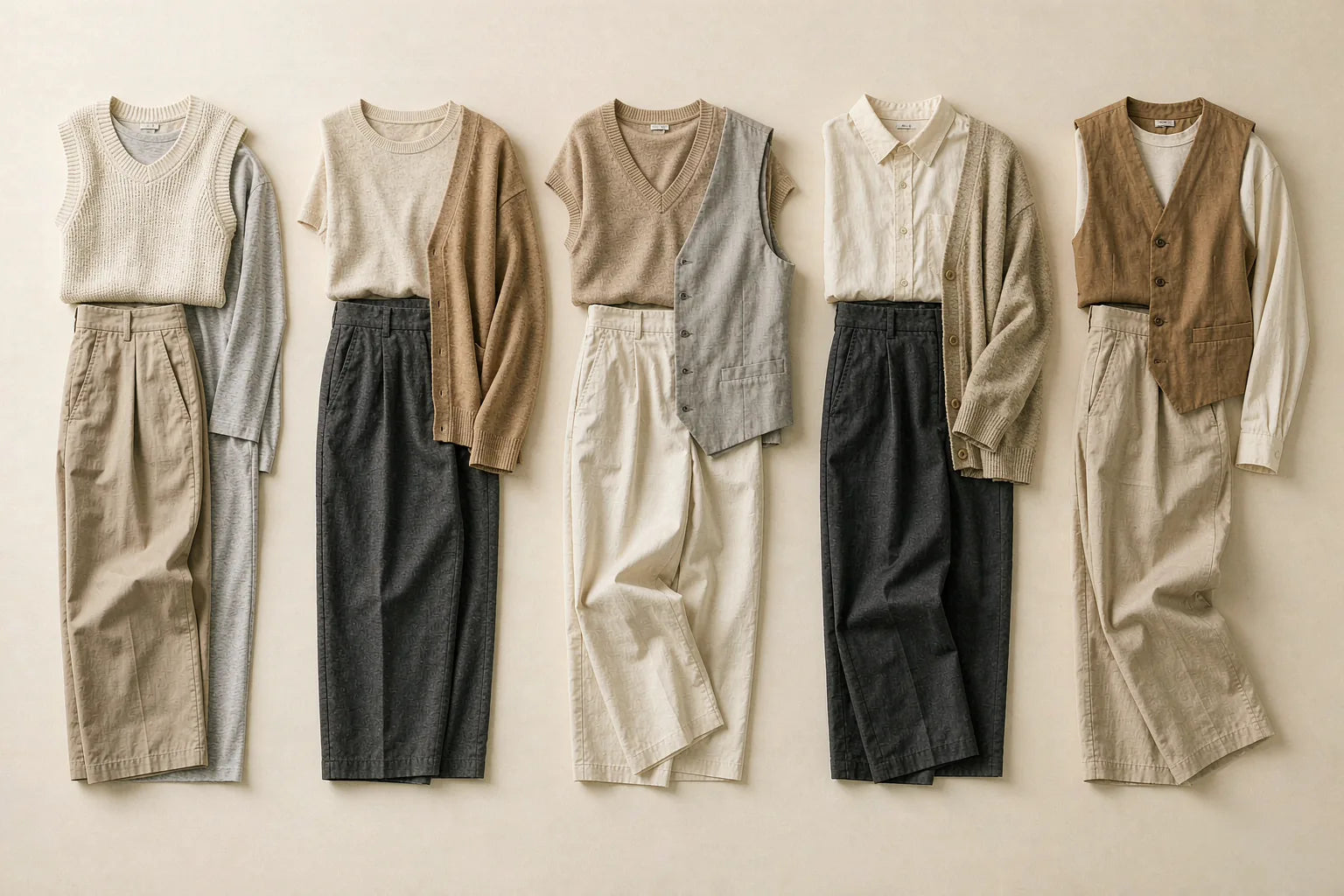
Formulas remove morning fatigue. Each pairs a breathable base with a desk layer and bottom. For more knit-top ideas, our guide on how to style a knit top covers silhouettes beyond the office.
Formula 1 · The Daily Default
A matte-texture short-sleeve knit top with high-waist wide-leg relaxed pants, cardigan in the drawer. The knit breathes on the platform; the trousers let air move; the cardigan closes the gap when you sit. This is what I wear three days a week.
Formula 2 · The Polo Polish
A striped polo-collar knit top over high-waist straight-leg trousers, topped with a minimal lapel jacket. The collar does the formal work for you — I've walked this one through three downpours and the hem still lands where it started.
Formula 3 · The V-Neck Elevation
A slim V-neck base layer top with trousers, finished with a wool-blend layering cardigan. This is my 8:30 client-meeting default — the V-neck means the cardigan is optional, not load-bearing.
Formula 4 · The One-and-Done
A knit two-piece set worn together on presentation days, split apart later. Add a lightweight long-sleeve cardigan for cold afternoons. A set looks like you meant it, even if you threw it on in six minutes.
Formula 5 · The Sweater-and-Vest
A crew-neck knit sweater over high-waist wide-leg relaxed pants, with a tailored button-front vest. The sweater handles genuinely cold offices; the vest sharpens the silhouette without sleeves.
The button-front crew-neck knit cardigan pulls double duty across all five formulas — button it as a top or leave it open as a layer, making it the best-value single piece in my own drawer.
How Do You Layer Without Looking Bulky in a Tropical Climate?
Bulky layering is the most common mistake I see in tropical offices — someone grabs the first thick thing they own the moment the AC bites. The result reads as survival, not style.
Slim base, structured mid. The base skims; the mid-layer carries structure. Fine-gauge knit follows your line, the cardigan holds the shoulder seam. Together they pass for tailoring.
One-bulky-piece rule. If the cardigan is chunky, the base is a fine shell and trousers are straight-leg. Two bulky pieces announce the weather before you do.
Sleeve scrunch. Push cardigan sleeves to the forearm — exposes the wrist, narrows the line, stops fabric bunching at the elbow.
Texture over colour. A smooth knit under a ribbed cardigan creates depth without volume. Interest comes from how materials interact, not how loudly they announce themselves.
What Should You Keep at Your Desk for Emergency Warmth?
Even with a solid system, some days demand extras. Monsoon rain cools the air; certain meeting rooms run vents that could double as meat lockers. A small desk kit covers those edge cases:
- One cardigan — the daily layer, always there.
- One packable scarf — wraps shoulders in cold rooms, stuffs into a pouch otherwise.
- Thin socks — cold feet are the silent office misery. A thin cotton pair in the drawer saves you when open-toe shoes meet freezing floors.
- One structured blazer — a tailored notch-lapel jacket behind your chair deploys in seconds for surprise meetings.
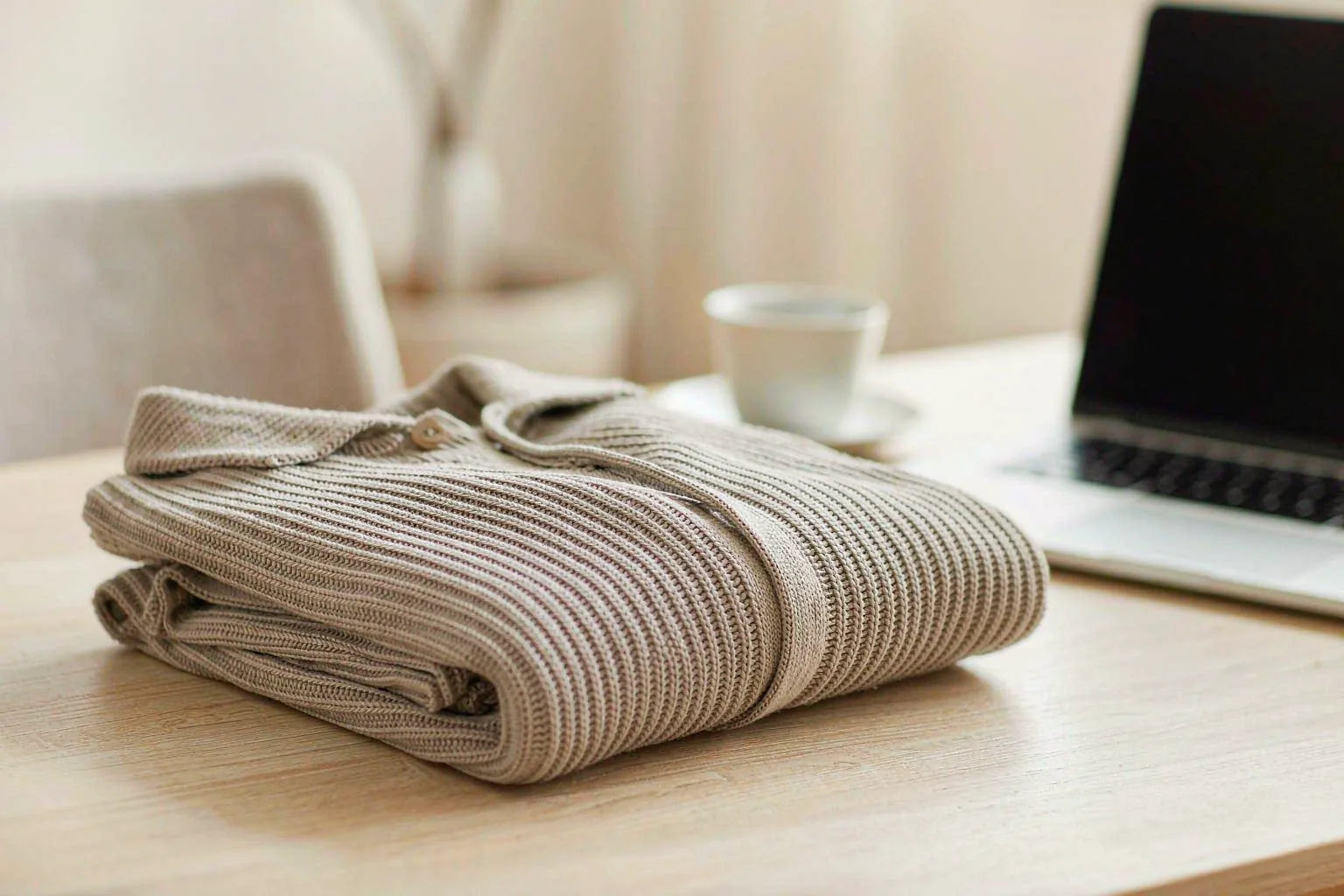
Fold cardigans flat with tissue between layers to prevent pilling. Hook the blazer on a padded hanger — never on the chair back, which distorts knit shoulders over time.
How Do You Transition Your Outfit From Outdoor Heat to Indoor AC?
Run it the same way for a week and it stops being a decision.
Commute. Base layer only. Warm pieces in the tote or already at the office. If rain threatens, carry a compact umbrella — a damp jacket becomes a humidity chamber on skin.
First five minutes. Sit, place your bag, reach for the cardigan immediately — before email, before coffee. Layering while still warm from outside is the highest-leverage thirty seconds of my day; once you cool down, warming back up takes far longer.
Lunch. Cardigan stays on the chair. Walk out in the base, come back, re-layer.
End of day. Cardigan off, back in the drawer. Walk out in the base — evening pavement still holds 27–29°C.
Rain contingency. Caught once at KL Sentral in a monsoon cloudburst wearing a cotton-modal knit, I was damp for fifteen minutes and dry by my desk — knits wick and release that fast. The same in a woven shirt means creases until you get home. Keep a compact umbrella permanently in your work tote.
Which Common Layering Mistakes Should You Avoid in the Tropics?
Five mistakes I see weekly, and have made most of:
- Wearing the warming layer during the commute. The cardigan is soaked in transit sweat before 9am. Now it holds no insulation and smells. Carry it; do not wear it.
- Heavy wool when fine-gauge knit suffices. Offices here are cold, not freezing. A fine knit layered under a shell traps less humid air and sheds faster; warmth comes from the stack, not from grams.
- Ignoring GSM online. A "lightweight cardigan" at 280 GSM is a blanket. Look for numbers; brands publishing them have nothing to hide.
- Two loose pieces stacked. Creates volume without shape, traps humid air. Slim base, structured mid — always.
- Forgetting the feet. Cold pools at floor level. Thin socks in the drawer, closed-toe on the coldest days.
Ready to Build Your Three-Layer Office System?
The test is smaller than the theory: park one cardigan at the office this week. If the 2pm goosebumps from the opening never come back, it's doing its job — you'll know before your tea cools. It works in monsoon rain and boardroom air-con alike — and it is exactly how we style air conditioned office outfits at RQFashion: quiet luxury that stays effortless through every temperature swing.
The pieces on my own rotation are below — Browse all RUIJIN pieces for fine-gauge knit bases, desk cardigans, and structured layers. Then round out the wardrobe with our work outfits for hot humid weather guide.
FAQ
Is layering really necessary in a tropical climate?
Yes. Offices in Singapore and Malaysia routinely cool to 21–22°C while streets sit at 32–33°C. That ten-degree gap, sustained for eight hours, makes a desk-stored layer essential. The solution is thin, fine-gauge pieces you remove the moment you step back into the heat.
What is the best base layer fabric for hot-and-cold offices?
Fine-gauge cotton-modal knits. They wick sweat during the commute, dry quickly indoors, insulate gently under a cardigan, and recover from tote-bag folds without creasing.
Should I keep a blazer at the office?
If your role involves client-facing meetings or presentations in cold rooms, yes. For most desk days, a featherweight cardigan handles the chill. A structured blazer on a hanger behind your door is reserved for situations that demand polish.
How many layers should I wear at once?
Three maximum: a breathable knit base, one desk-stored cardigan, and an optional scarf or blazer for the coldest rooms. More than three in the tropics creates bulk and traps humidity.
What should I wear in an air-conditioned office all day?
A fine-gauge knit base plus a desk-stored cardigan covers the full day. Keep the base polished enough to wear alone, add the cardigan the moment you sit down, and reserve a blazer or scarf for rooms below 21°C.
0 comments