

If you are shopping for knitwear that doesn't pill, the honest starting point is this: no knit is completely pill-proof, but pilling is predictable. The knits that stay smooth share three construction signals — long-staple or long-bast fibres, tightly twisted yarn, and a dense, fine-gauge stitch. Fibres like combed cotton, ramie and lyocell test well on all three, which is why they anchor a humid-weather wardrobe where friction from bag straps, desk edges and crossbody commutes never takes a day off. This guide explains why pilling happens, ranks the fibres by how they behave, teaches the 30-second counter test, maps the friction zones that start every pill — and shows which RQ knits are built for high-friction days.
Key Takeaways
- Pilling is fibre length plus yarn twist plus stitch density: short, loose and airy pills; long, twisted and dense resists.
- No natural fibre is pill-free — even fine wool sheds loose fibres in its first weeks — but combed cotton, ramie and lyocell keep a clean surface far longer.
- Acrylic and heavily brushed yarns are the fast lane to pills; blends over roughly 20% acrylic age worst.
- Friction, not washing, starts most pills: bag straps, underarms and desk edges are the real culprits.
- The 30-second counter test — look, squeeze, rub — predicts pilling better than any price tag.
Why do some knits pill and others don't?
Pilling is a mechanical story, not a moral one: short or loose fibres work their way to the surface under friction and tangle into tiny balls. Every knit sheds some surface fibre; the question is whether the fibre has the length and the twist to stay anchored. A tightly twisted yarn holds its fibres parallel and locked; a loosely spun, fluffy yarn offers them an exit. Add stitch density to the picture — tight, small stitches leave less room for fibres to migrate — and you have the complete equation.
This is why two sweaters with the same composition label can age differently, and why "100% natural" alone guarantees nothing: a short-staple cotton knitted loosely will fuzz faster than a combed, densely knitted blend. The composition tells you the raw material; the construction tells you how it was built. Both halves matter, and only together do they answer the question.
Which fibres resist pilling best?
Ranked by how they behave under real friction, the fibre ladder looks like this — with the caveat that yarn twist and knit density can move any fibre up or down one rung:
| Fibre | Why it behaves | Watch out for | Works for |
|---|---|---|---|
| Ramie & linen | Long bast fibres, dry clean surface, naturally low fuzz | Wrinkles by nature — that is creasing, not pilling | Shirts, pants, summer knits |
| Combed cotton | Combing removes short fibres; long-staple yarn stays smooth | Loose, brushed cotton knits still fuzz | Everyday tops, breathable cardigans |
| Lyocell | Long man-made cellulosic filament, smooth and dense | Usually blended; the blend partners matter | Fluid drape pieces, workwear |
| Worsted wool (fine-gauge) | Long, fine fibres combed parallel and tightly twisted | First-season micro-pilling is normal, then settles | Layering cardigans, office knits |
| Silk blends | Continuous filament strengthens the yarn | Depends on the partner fibre | Slim tops, base layers |
| Acrylic & brushed yarns | Short cut fibres, low twist, airy halo | Pills early and keeps pilling; avoid over ~20% in a blend | Best avoided for high-friction wear |
One nuance worth keeping: a small percentage of nylon or elastane (in the low single digits) is not a pilling risk — it is a resilience add-on that helps a knit recover its shape. The problematic blends are the wool-plus-acrylic and cotton-plus-acrylic ones, where short synthetic fibres anchor the pills that the natural fibres shed.
How can you test a knit for pilling in 30 seconds?
Three moves at the shelf or on delivery, no tools required — together they predict surface behaviour better than the price tag. Run them on any knit, including the ones already in your drawer:
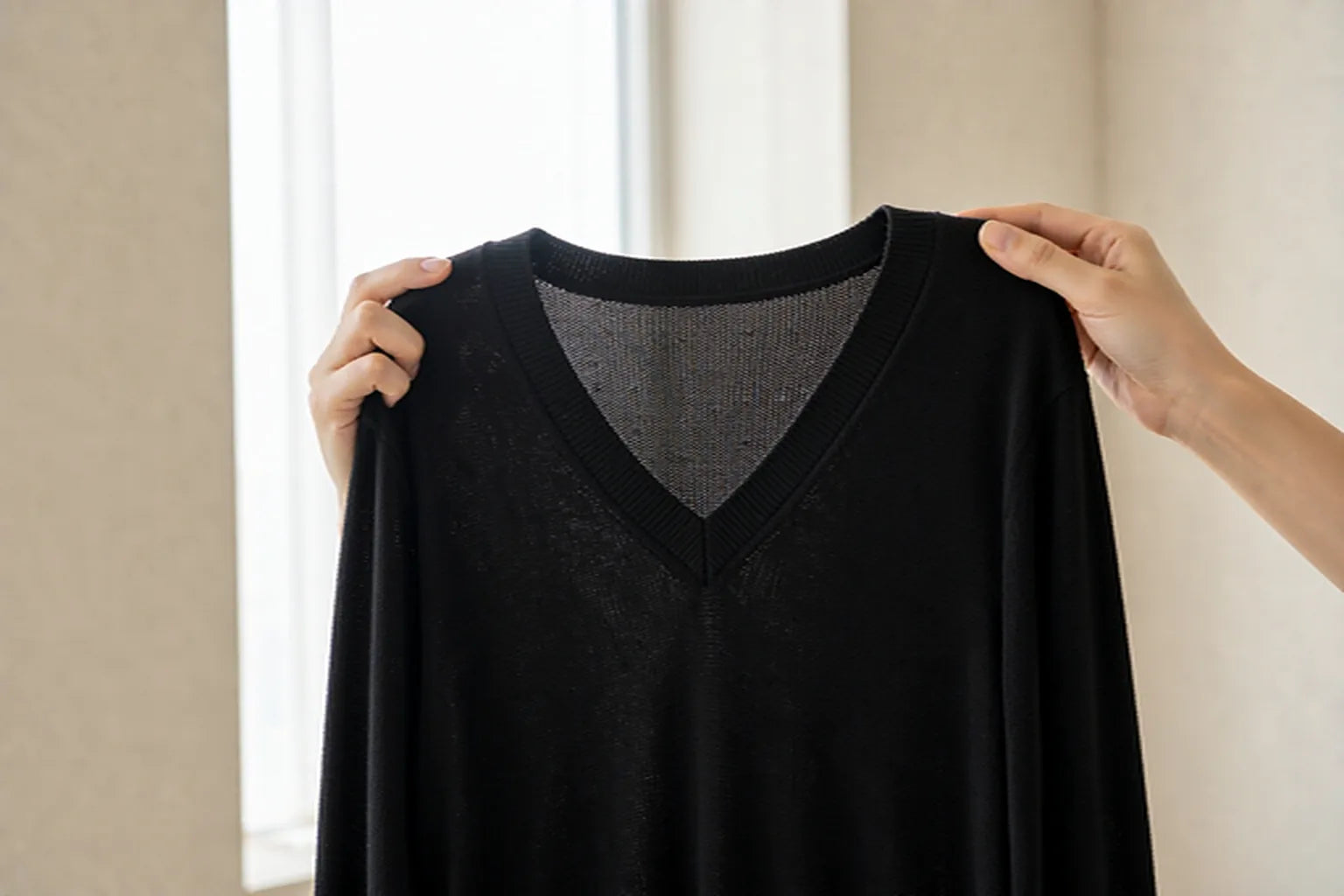
- The look test (10 seconds). Hold the fabric up at eye level toward the light. Stitches should read as even, tight, regular loops. A visible fuzzy halo — a soft bloom standing off the surface — is loose fibre announcing its future.
- The squeeze test (10 seconds). Squeeze a sleeve in your fist for three seconds and release. A tightly twisted yarn springs back with barely a crease; a loose spun one stays wrinkled and looks tired immediately.
- The rub test (10 seconds). On an inside seam, rub the fabric against itself briskly for ten seconds. Surface fibres lifting already? That knit will pill under a bag strap within weeks. A smooth, cool surface that stays smooth is the keeper.
The rub test doubles as a fitting-room ritual for high-friction purchases — cardigans, in particular, because they meet bag straps all day. A knit that passes all three tests on day one will still read clean in month six; the knit that fails the rub test has already told you its ending.
Where does pilling start first?
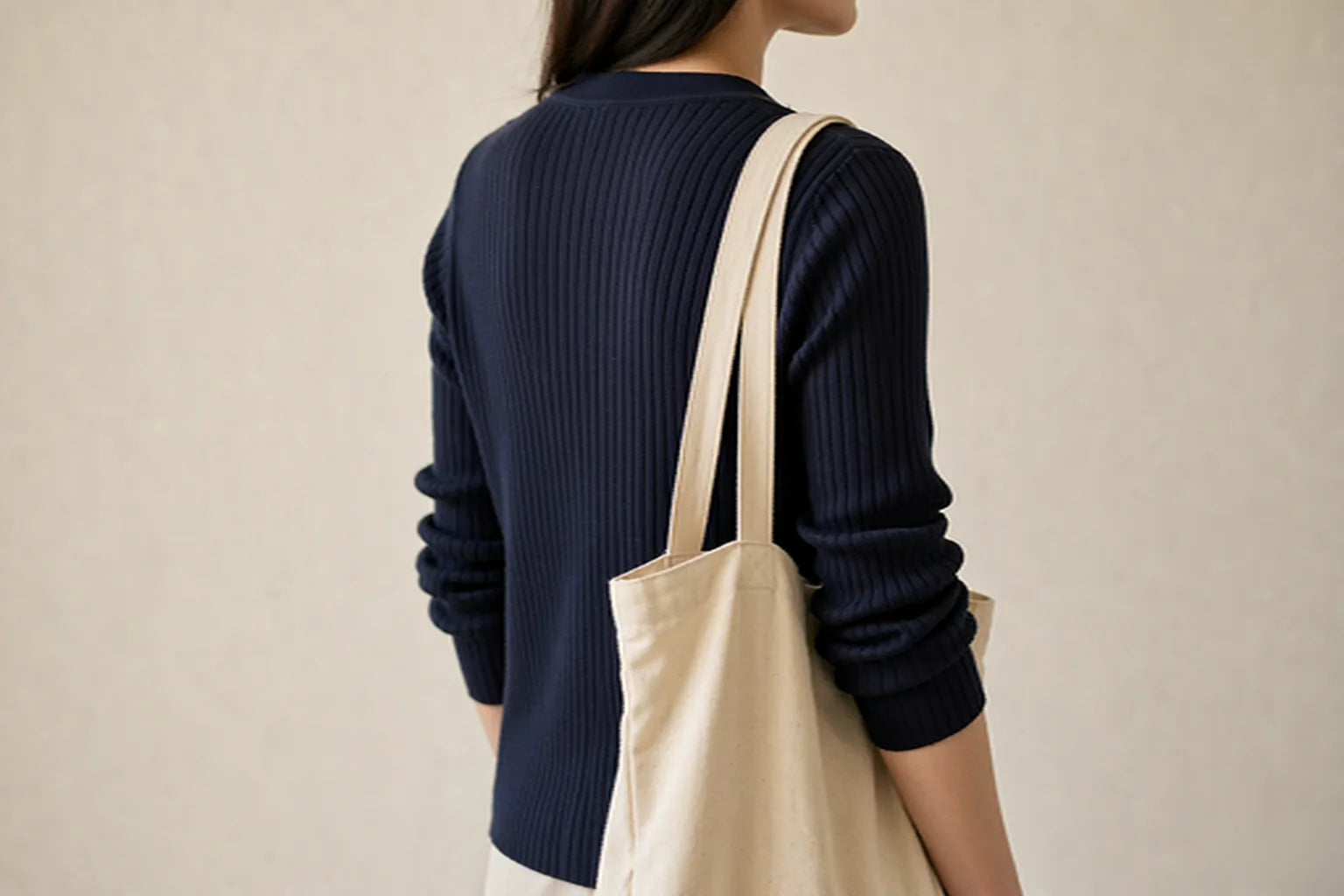
Friction maps are more useful than fibre charts, because most pills are located, not random. Four zones account for the overwhelming majority of real-world pilling:
- The bag-strap diagonal — across the chest or shoulder, where a tote or crossbody rubs the same line for hours. This is the single most common pilling zone on cardigans and side-seams.
- The underarms and side body — arm-against-body friction, amplified in humid weather by damp fabric that grips instead of glides.
- The desk edge and seat belt — the front-hip line where you lean, drive and commute.
- The sleeve exterior — elbows on tables, arms against coat linings.
Humid weather quietly raises the stakes: moisture softens fibres and increases grip, so the same commute produces more friction wear in Singapore than in a dry climate. This is one more reason the tropical wardrobe leans on smooth, dense knits — the fabric engineering chapter in our best fabrics for hot, humid weather guide covers that side in depth.
Does fine-gauge automatically mean pill-resistant?
Fine gauge helps, but fibre decides the ceiling — the two signals multiply, they don't substitute. A fine-gauge knit in short-staple, low-twist yarn is still a pilling knit; it simply pills in smaller stitches. Conversely, a dense cable knit in long-staple combed cotton resists well despite its dimensional texture. Our fine-gauge vs chunky knit comparison breaks down the gauge axis in full; for pilling purposes, think of density as the lock and fibre quality as the bolt — you need both.
One texture note from the same logic: cable crossings are actually the most pill-resistant part of a cable knit, because the crossing compresses the yarn and locks the twist. The flatter panels between cables, if knitted loosely, are where fuzz appears first. Judge a textured knit by its plainest panel, not its showpiece.
How do you read a fibre label in ten seconds?
The content label tells the pilling story before you touch the garment — read it in this order. First, look at the first two fibres listed: they are the body of the yarn, and everything after them is seasoning. A label that opens with cotton, ramie, lyocell or wool is promising long-fibre behaviour; one that opens with acrylic is announcing its halo, whatever the percentage.
Second, place the synthetics. A low single-digit share of nylon or elastane is a resilience feature — it helps the knit recover at elbows and cuffs. Acrylic is different: past roughly 20% of a blend it becomes the dominant pilling risk, because its short cut fibres anchor the balls that natural fibres shed. A wool-plus-acrylic or cotton-plus-acrylic blend in an even split is the classic fast-aging recipe.
Third, weigh the cellulosic names honestly. Viscose drapes beautifully but is weakest when wet — in a humid climate that matters — so it earns its place most often in tight knits or as a minority partner to lyocell and cotton. Ramie and linen bring the driest hand of the group. None of these readings replace the three tests above; they simply predict what the tests will show before you reach the rail.
One fit note travels with any RQ trousers you pair these knits with: the pants — from the linen straight legs to the lyocell-linen striped wide legs — are drafted for a 160 cm-plus frame, so the fabric choices on this page and the length choices on the fit-guide side stay consistent. If you are under 160 cm, the same planning applies that the hem guides recommend: expect a trouser hem allowance and lean on the tops, where the length decision is already made for you.
The humid commute deserves its own line in the friction map, because it multiplies every zone above. An MRT handrail works one sleeve in stop-start strokes; a bus strap loads the same shoulder diagonal all week; a bicycle basket tips a tote so its strap digs into one side seam; and the walk between all three adds arm-swing rub against the hip. In a dry climate each of these is a minor load; in 32-degree air saturated with moisture, damp fibres grip instead of glide and every repeated stroke leaves a little more fuzz behind. This is why the smooth-surface knits on the ladder above are not a styling preference here — they are the practical answer to how the city actually moves.
Which RQ knits are built for high-friction days?
Within the RQ edit, four pieces are natural answers to the pilling question — selected for what the fibre ladder likes, not for marketing claims. None of them will never pill; all of them are built from fibres and constructions that test well on the three signals:
| Piece | Colour | Fibre build | Why it earns its place | Price |
|---|---|---|---|---|
| Pointelle Short-Sleeve Knit Top | Black | 100% combed cotton, pointelle structure | Combing removes the short fibres; a clean cotton surface for daily rotation | $38.99 |
| Relaxed Minimalist Shirt | Lilac | 100% ramie, light summer weave | Long bast fibre with a dry, low-fuzz surface — the ladder's top rung | $60.99 |
| Cap-Sleeve Crew Knit Top | Navy Blue | Cellulose-rich viscose-lyocell blend | Lyocell's smooth filament face plus a dense, cool hand | $46.99 |
| Relaxed Striped Wide-Leg Pants | Oatmeal Stripe | 70% lyocell, 30% linen | The hip and thigh friction zone, answered in smooth long-fibre cloth | $60.99 |
The honest framing matters: these are the fibre and construction choices that age well under friction, chosen for a humid climate where most knits meet a bag strap every day. Care still plays its part — the cotton, linen and lyocell care guide covers the wash side of keeping surfaces clean.
What should you do when pills appear anyway?
Treat pills early and gently — the goal is removing balls, not shaving the knit. A handheld sweater comb, worked lightly in one direction on a flat surface, lifts pills without cutting yarn; fabric shavers work too but demand a light touch on fine-gauge knits. Wash less, wash cool, inside out in a mesh bag, and dry flat: agitation and heat are what keep feeding new pills. The full protocol — comb technique, washing rhythm and storage — lives in our guide to stopping knitwear pilling, and storage through the wet season matters just as much in this climate: see storing knitwear in humid climates.
Frequently Asked Questions
What knitwear doesn't pill?
A: Knits built from long fibres, tightly twisted yarn and dense stitches — in practice, combed cotton, ramie, linen and lyocell lead the list, with worsted fine-gauge wool close behind. Nothing is pill-proof, but these fibres pill slowly and settle early rather than degrading continuously.
Does 100% cotton pill?
A: It depends on the cotton and the knit. Combed, long-staple cotton in a dense knit stays smooth for years; short-staple cotton in a loose, brushed knit fuzzes quickly. The word "cotton" on a label is the start of the question, not the answer — the combing and the stitch density finish it.
Do viscose and rayon knitwear pill?
A: They can, mainly where the knit is loose or the blend leans synthetic. Viscose fibres are smooth but relatively weak when wet, which is why humidity matters — a tight, dense viscose knit behaves far better than an open one. Lyocell, its more modern cellulosic cousin, has a stronger filament and resists fuzzing more reliably.
Is pilling a sign of bad quality?
A: Not by itself. Even fine wool knits shed loose surface fibres in their first weeks of wear; that early pilling slows and settles. What signals a problem is pilling that continues to worsen after every wash — that points to short-staple yarn or a heavy acrylic blend, not to care mistakes.
How do I stop my cardigan pilling where my bag sits?
A: Manage the friction, not just the fibre: swap the shoulder the bag rides on, choose a smooth-faced knit for carry days, and lift pills early with a comb before they tangle into the knit. Our pilling care guide shows the full technique step by step.
Build the low-pill drawer first
Start with the Pointelle Short-Sleeve Knit Top in Black for a combed-cotton daily driver, and the Relaxed Minimalist Shirt in Lilac when the day asks for the top rung of the fibre ladder. For the air-conditioned commute, the Fine-Gauge Knit Cardigan for Layering in Navy Blue covers the indoor hours — and to weigh fibres against stitch density across the whole drawer, browse new-in with the three-signal test in hand.
0 comments