

The Maillard colour palette is a wardrobe built from food-inspired browns — apricot, oatmeal, caramel, khaki, terracotta and espresso — worn as tone-on-tone layers instead of being mixed with bright colour. It borrows its name from the Maillard reaction, the browning that gives seared meat and baked bread their warm range. In practice you need three to five shades that sit close together on the warm-neutral spectrum, one darker anchor, and fabrics with visible texture so flat colour still reads interesting. It suits warm climates because it looks calm rather than heavy, and it sits naturally alongside quiet-luxury knitwear. This guide covers which shades belong in the palette, how to layer them, and which tones suit warm or cool undertones.
What is the Maillard colour palette?
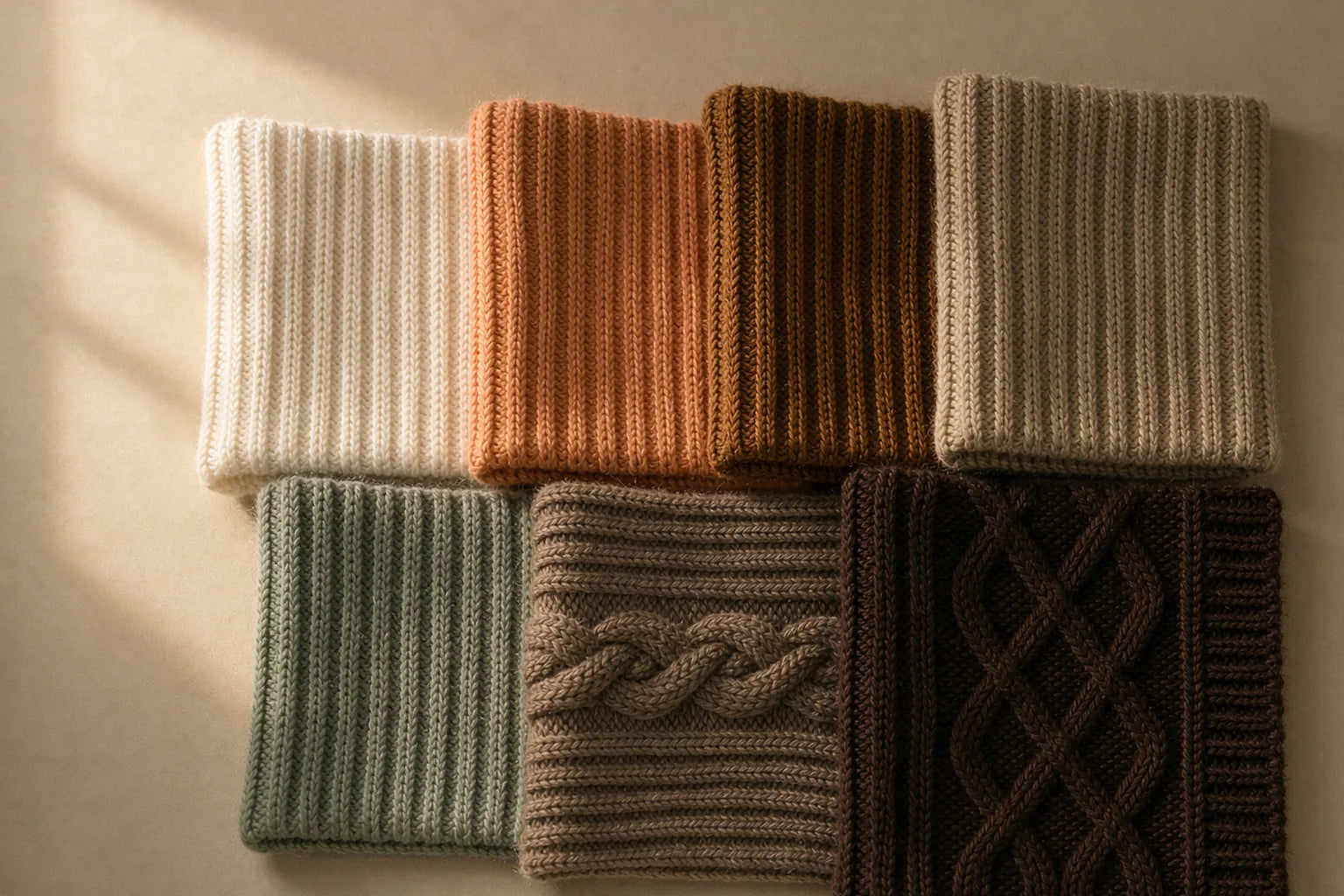
The Maillard palette is a group of warm brown and beige tones dressed together as a single family. Stylists borrowed the name from food chemistry: the Maillard reaction is what turns dough into golden crust and gives caramel, coffee and toasted nuts their colour. The palette copies that same gradient — pale toasted cream at one end, dark espresso at the other, with apricot, oatmeal, caramel, camel, khaki and terracotta filling the middle.
What separates it from generic neutrals is warmth and continuity. Cool greys and stark optic white are usually left out. Instead of pairing one beige piece with unrelated colour, the whole outfit stays inside the brown family, so the eye reads texture and silhouette first. That is why the palette became shorthand for old money style and quiet dressing — it removes visual noise without falling back on plain black.
It also carries a practical benefit. Because every shade shares an undertone, almost any two pieces in the palette work together. A five-piece Maillard capsule produces far more usable outfits than a five-piece wardrobe of unrelated colours.
Which colours belong in a Maillard wardrobe?
Think of the palette as a ladder from light to dark. You do not need every rung; you need coverage at the top, the middle and the bottom. The table below maps the common Maillard shades to the job each one does in an outfit, and notes which of them are currently available in the RUIJIN pieces stocked at RQFashion.
| Shade | How it reads | Role in an outfit | In stock at RQFashion |
|---|---|---|---|
| Oatmeal / toasted cream | Softest rung; warm, not white | Base layer, lightest top | Yes — Oatmeal knit set |
| Apricot | Warm blush-tan with a golden cast | Main colour piece; flatters warm undertones | Yes — two Apricot knit tops |
| Caramel / camel | Mid-brown, the classic “old money” tone | Outer layer, coat or wide trouser | Not stocked — build with outerwear or a bag |
| Khaki | Muted brown-green; quieter than caramel | Versatile mid-tone, dresses down easily | Yes — Khaki crew-neck cardigan |
| Terracotta | Red-leaning clay tone; the loudest rung | Accent only — shoes, scarf, single top | Not stocked — treat as accessory accent |
| Beech green | Soft grey-green; sits beside khaki | Alternative mid-tone for green-friendly skin | Yes — Beech Green knit set |
| Espresso / dark chocolate | Deepest rung, warm alternative to black | Anchor: trouser, skirt, shoe | Not stocked — Navy or Black currently fill the anchor role |
Two notes on that last column. First, a palette does not have to be bought in one place — the anchor and outer layers are the easiest pieces to source secondhand or from your existing wardrobe. Second, Navy and Black are technically outside the Maillard family, but both work as a neutral anchor under warm browns, and both are stocked in the current RUIJIN range.
How do you build a Maillard wardrobe from scratch?
Start with three pieces, not thirty. The palette rewards repetition, so a small set worn often beats a large set worn rarely.
- One light top. Oatmeal or apricot, in a fabric with texture. The cotton cable-knit crew neck top is a straightforward example: 100% combed cotton in Apricot or Black, with cable texture that keeps a plain colour from looking flat.
- One mid-tone layer. Khaki or beech green, ideally something you can wear open. The crew-neck knit cardigan comes in Khaki and Navy and mixes paper yarn, nano-silk and rayon with a linen panel, so it has a drier, more papery hand than standard acrylic knit.
- One anchor. A dark trouser or skirt in espresso, navy or black. This is the piece that stops a head-to-toe brown outfit from reading washed out.
Add a fourth and fifth piece only when you have found the gap by wearing the first three. Most people discover they need a second light top before they need a second colour.
How do you wear two brown tones together without looking flat?
Tone-on-tone dressing fails for one of two reasons: the shades are too close, or every fabric has the same finish. Fix either and the outfit reads intentional.
Leave a gap on the ladder. Two shades that sit side by side — oatmeal with pale apricot, for instance — can look like a laundry accident. Skip a rung instead: oatmeal with khaki, or apricot with espresso. You want to see the difference at arm's length, not squint for it.
Mix the surface, not the colour. A cable knit against a smooth linen trouser gives the eye something to do even when both pieces are brown. This is why knitwear carries the palette so well — cable, rib and fine-gauge textures all catch light differently. A knit two-piece set handles this in one purchase: the outer layer and matching camisole share a tone, so the contrast comes from the layering itself rather than from added colour.
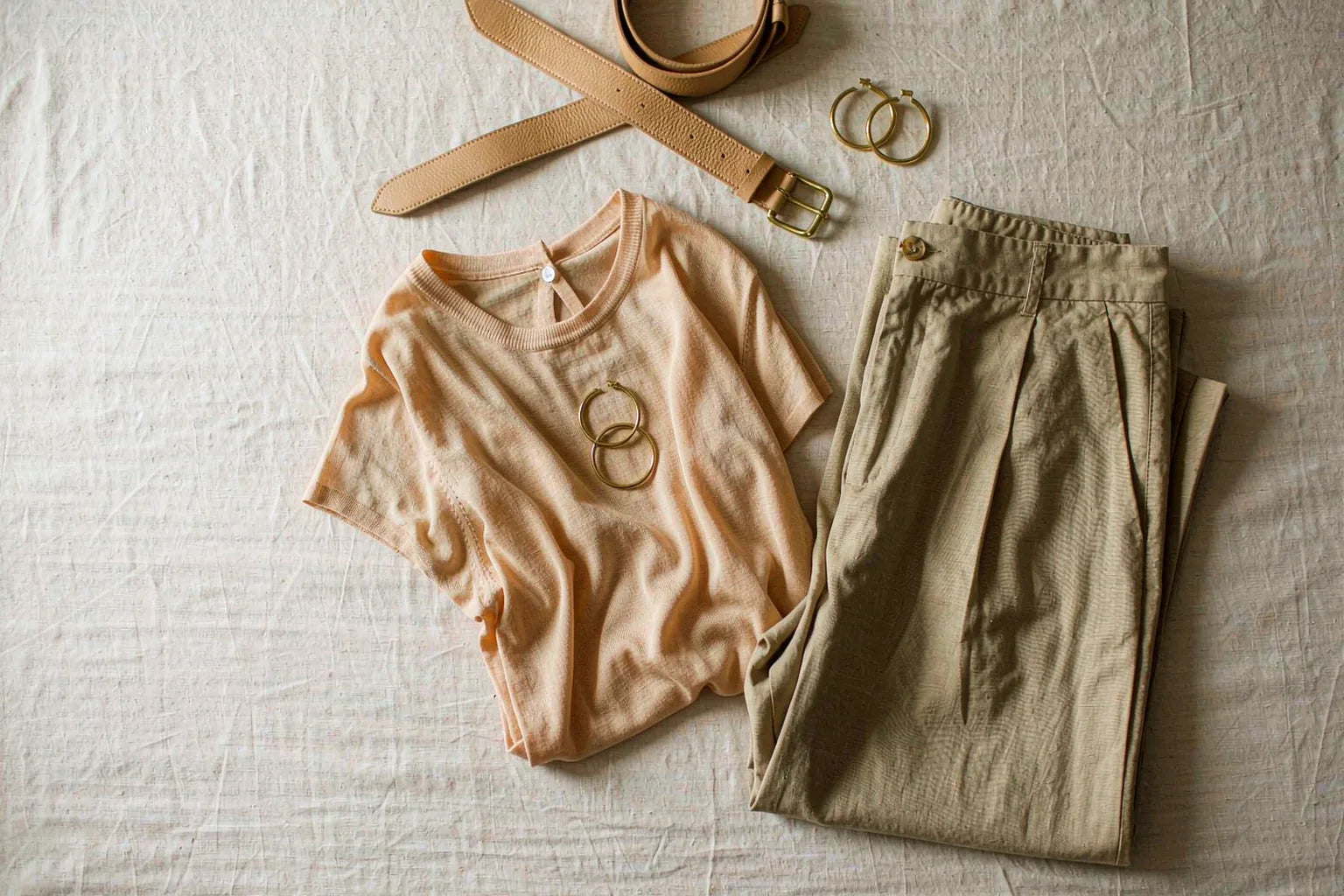
Keep metal and leather in the same temperature. Warm browns sit better with gold, brass and tan leather than with bright silver. It is a small detail that quietly holds the outfit together.
Does the Maillard palette work in a tropical climate?
Yes, and it works better than the autumn styling it is usually photographed in. The palette is a colour system, not a weight class — nothing about warm brown requires wool or heavy layers. What changes in Singapore and Malaysia is the fabric you carry it in.
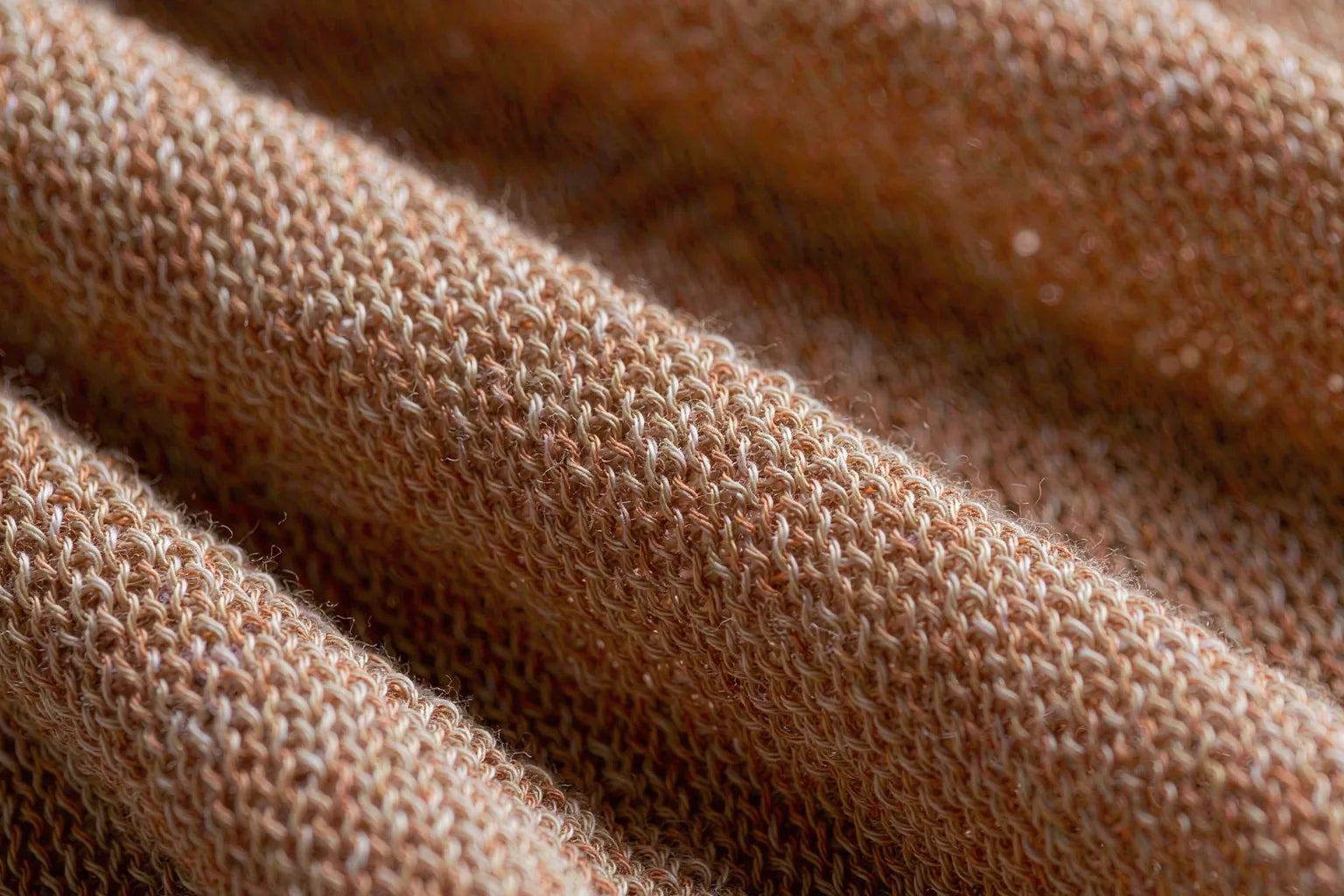
Cotton, linen and lyocell all take warm dye tones cleanly and stay comfortable in humidity. The pieces in the current RUIJIN range are built for that: the short-sleeve knit cardigan in Apricot blends 40% combed cotton and 5% linen with 55% polyester, while the two-piece set uses 28% lyocell with 12% linen. Fine-gauge knits also give you the texture the palette needs without adding bulk.
Two practical adjustments for hot weather. Lean lighter on the ladder — oatmeal and apricot reflect more heat than espresso, so the dark anchor is better used on a trouser or shoe than on a top. And treat layering as optional: an open short-sleeve cardigan over a camisole gives you the visual layering of the palette without a second warm layer against the skin.
Which Maillard shades suit your skin undertone?
Almost everyone can wear some part of this palette; the question is which rung sits closest to your face. A quick test: look at the veins on your inner wrist in daylight. Greenish veins usually indicate a warm undertone, blue or purple suggests cool, and a mix points to neutral.
| Undertone | Wear near the face | Better kept away from the face |
|---|---|---|
| Warm (golden, olive) | Apricot, caramel, khaki, terracotta | Very pale ashy beige |
| Cool (pink, blue) | Oatmeal, espresso, taupe-leaning browns | Strong orange-terracotta right at the collar |
| Neutral | Most of the ladder; start with khaki and oatmeal | Nothing in particular — vary by contrast instead |
If a shade feels wrong at the collar, it does not have to leave the wardrobe. Move it down the body — a terracotta shoe or khaki trouser sits far from the face and stops competing with your complexion.
How is the Maillard palette different from beige minimalism?
They overlap, but the intent differs. Beige minimalism aims for absence: fewer details, cooler and flatter neutrals, an almost clinical calm. The Maillard palette aims for warmth and depth — it wants the outfit to look rich rather than blank.
| Maillard palette | Beige minimalism | |
|---|---|---|
| Colour temperature | Consistently warm | Often cool or greyed |
| Number of tones | Three to five, layered | One or two, repeated |
| Role of texture | Essential — carries the look | Optional, often smooth |
| Overall mood | Warm, settled, tactile | Cool, pared-back, quiet |
In practice you can run both systems from the same wardrobe. Add warm knits and tan leather and it reads Maillard; strip back to one flat tone and it reads minimalist.
What mistakes flatten a Maillard outfit?
Four issues account for most of it.
- No anchor. All-light-brown with no dark piece looks unfinished and washes out in photographs. One deep tone fixes it.
- One fabric everywhere. Three smooth pieces in three similar browns read like a uniform. Vary the weave before you vary the colour.
- Cool white in the middle. Optic white next to warm brown makes the brown look muddy. Use oatmeal or cream instead.
- Poor fit. The palette has no pattern and no logo to distract, so the silhouette does all the work. Note that the RUIJIN knits run petite, so sizing up is worth considering if you fall between two sizes.
How many pieces do you need to make it work?
Five is a workable target: two light tops, one mid-tone layer, one dark anchor, one pair of shoes in a warm neutral. That set produces roughly a week of outfits without repeating a combination, because every piece shares an undertone.
Build it slowly and in order of wear frequency. A top you wear twice a week earns its place faster than a coat you wear twice a season — particularly in a climate where outerwear is rarely needed.
What does “Maillard dressing” actually mean?
It means dressing in a gradient of warm browns — from oatmeal and apricot through caramel and khaki to espresso — worn together rather than broken up with bright colour. The name comes from the Maillard reaction, the chemical browning behind toasted bread and caramel.
Is the Maillard palette the same as old money style?
Not quite. Old money style is a broader aesthetic covering fit, fabric and restraint; the Maillard palette is one colour system that suits it well. You can dress old money in navy and grey, and you can wear Maillard tones in a completely modern silhouette.
Can I wear black with the Maillard palette?
Yes, as an anchor rather than as the main colour. Black trousers or shoes under warm browns work well. Head-to-toe black with a single brown top reads as a black outfit with an accent, which is a different look.
Which Maillard colours does RQFashion currently stock?
The RUIJIN pieces in the current range cover Apricot, Oatmeal, Khaki and Beech Green, with Navy and Black available as anchors. Caramel, terracotta and espresso are not stocked at the moment, so those rungs are best filled with outerwear, trousers or accessories.
Does the palette suit humid weather?
Yes. Choose cotton, linen and lyocell blends in fine-gauge knits, lean towards the lighter shades near the face, and keep the dark anchor below the waist. RQFashion ships to Singapore and Malaysia, and orders over $80 USD ship free.
Browse the RUIJIN collection for Apricot, Oatmeal, Khaki and Beech Green knits, or read the shipping and returns details for Singapore and Malaysia.
0 comments